
Pipe Repair in the USA
True Plumbing & Hydrojetting sends technicians to evaluate pipe failures caused by internal corrosion, root intrusion, soil movement or joint separation. They measure remaining wall thickness with ultrasonic gauges and run camera inspections to map the exact length of affected pipe before choosing between sectional replacement or full reroute.
Water pressure drops and discolored flow often trace back to scale buildup inside galvanized or cast iron lines. Our crews isolate the leak by shutting valves at the main and testing isolated branches so only the damaged run receives new material such as copper, PEX or schedule 40 PVC. Check the True Plumbing & Hydrojetting homepage if pipe repair requires hydrojetting anywhere in the USA.
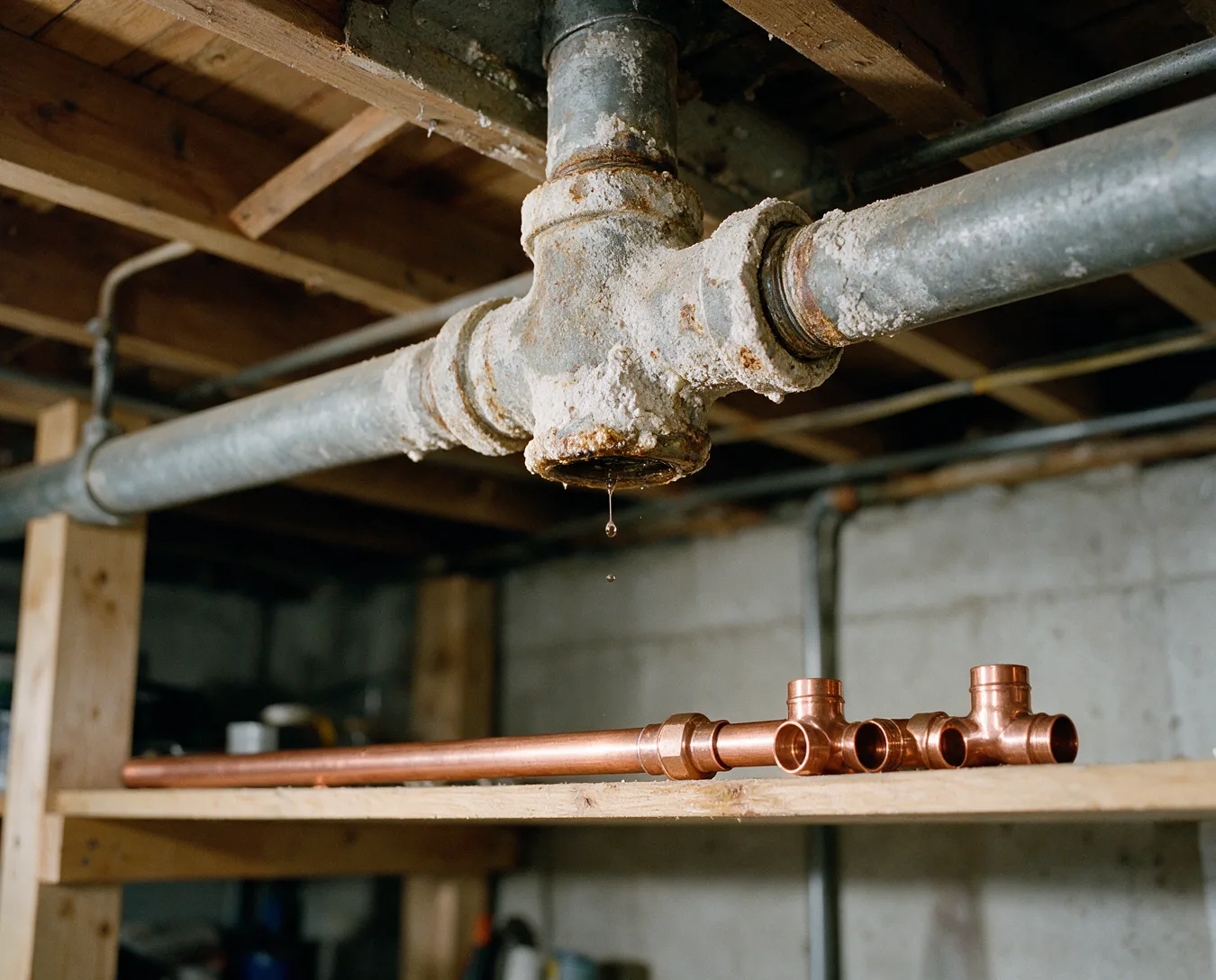
Warning Signs of Pipe Issues
- Reduced flow at multiple fixtures on the same branch line.
- Rusty or brown water appearing after the tap runs briefly.
- Damp drywall or ceiling stains directly below supply lines.
- Hissing or dripping sounds inside walls when water is off.
- Visible puddles forming near slab edges or foundation walls.
Common Causes of Pipe Failure
Galvanized steel pipes lose zinc coating over decades, allowing rust to narrow the bore and create pinholes. Tree roots enter joints in clay or concrete sewer laterals, cracking the pipe wall and letting groundwater infiltrate during heavy rain.
Ground settling shifts bell-and-spigot connections on older cast iron or pushes apart glued PVC joints, producing leaks at elbows and tees. Hard water deposits calcium and magnesium scale that traps debris and raises pressure until a weak fitting bursts.
What Technicians Inspect and Measure
Our technicians start by isolating the line at the main shutoff and installing a pressure gauge to record static and residual pressure. They insert a camera to record pipe diameter, joint condition, and any root or scale obstructions while noting the distance from cleanouts.
Wall thickness is checked with an ultrasonic meter at multiple points. Technicians also verify the material type by examining exposed sections and test for electrical continuity on metal pipes to rule out stray current corrosion before deciding on replacement length.
Repair and Replacement Options
Sectional repair involves cutting out the failed segment and installing a new coupling or sweat joint using matching material. For longer runs, technicians reroute with PEX tubing pulled through existing access points to avoid opening large wall sections.
When multiple leaks appear along the same line, a full repipe from the main to the fixture group is performed. New shutoff valves are added at each fixture and dielectric unions are placed where copper meets steel to prevent future galvanic corrosion.
First Steps Before Technicians Arrive
Homeowners should locate the main water shutoff valve and turn it clockwise until it stops. All fixtures on the affected branch must remain unused to keep additional water from escaping through the leak and to protect floors from further damage.
Open a cold-water faucet at the highest point in the house to relieve pressure in the line. Avoid attempting to tighten visible fittings or apply sealants, as these actions can crack aged pipe and enlarge the leak before our crew reaches the site.
Pipe Repair questions
How does True Plumbing & Hydrojetting decide between repair and full replacement?
Technicians measure remaining wall thickness and review camera footage for multiple defects. If more than one section shows heavy corrosion or root damage within a short distance, they recommend replacing the entire run to prevent repeat leaks in adjacent pipe.
What pipe materials are used during Pipe Repair?
Copper is installed for exposed supply lines where soldering is feasible. PEX tubing is pulled for concealed runs because it requires fewer joints. Schedule 40 PVC is used on drain lines that need solvent-weld connections and proper slope for drainage.
Can a homeowner safely shut off water before help arrives?
Yes. Locate the main valve near the meter or where the supply line comes into the house and turn the handle clockwise. This stops flow to the entire system and prevents additional water loss until our technicians isolate the branch and complete the repair.
Why do technicians test pressure after Pipe Repair is finished?
A pressure test confirms that new joints hold without drops. Technicians pressurize the repaired section to 100 psi for 30 minutes while monitoring the gauge, then restore normal household pressure to verify flow at every fixture served by that line.
Schedule Pipe Repair
Contact True Plumbing & Hydrojetting to assess pipe condition and complete targeted repairs using appropriate materials.