
Sewer Line Repair in the USA
Sewer lines carry waste from every fixture to the main. When roots enter joints or pipes sag and crack, solids collect and water backs up into the home. True Plumbing & Hydrojetting sends technicians with cameras to trace the exact location and length of damage before any digging begins.
Our crews measure pipe diameter and slope with electronic locators, then decide whether to replace a short section or pull a new liner through the old pipe. The choice depends on how far the break runs and whether the surrounding soil has shifted. Visit the homepage to learn how True Plumbing & Hydrojetting resolves sewer line repair calls from across America.
Warning Signs of Sewer Line Trouble
- Multiple drains slow down at the same time.
- Gurgling sounds come from floor drains after flushing.
- Sewage odor rises near basement floor drains.
- Lush green patches appear over the yard in dry weather.
- Toilets bubble when the washing machine runs.
Common Causes of Sewer Line Failure
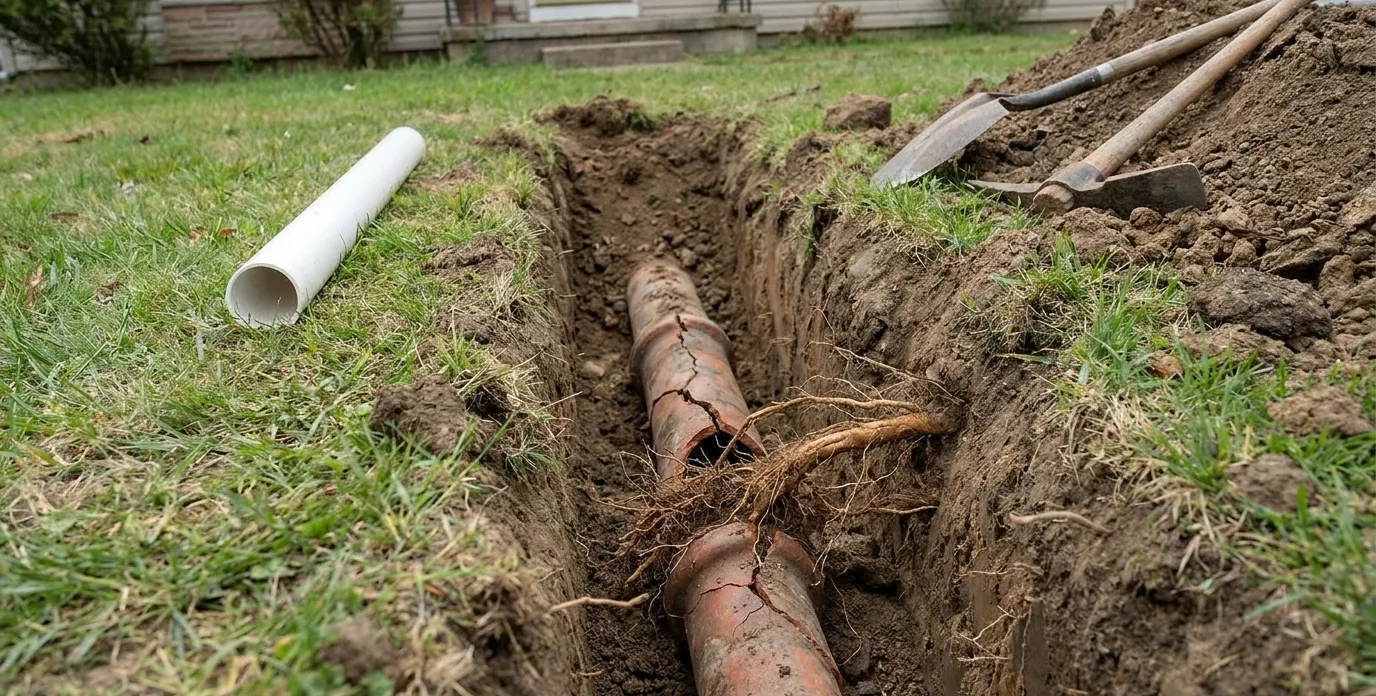
Tree roots seek moisture and push through any small opening at pipe joints. Once inside, they thicken and trap paper and grease until flow stops. Cast iron pipes also rust from inside out, leaving scale that narrows the bore over decades.
Ground movement from freeze and thaw cycles can crack clay or concrete pipes and create offsets. When an offset catches solids, the line loses its self-cleaning velocity and backups repeat.
What Technicians Check on Site
A camera is pushed from the cleanout or roof vent while distance and depth are recorded. The video shows cracks, root masses, standing water, and any belly where the pipe has settled below grade. Technicians note the distance from the house to each defect so repair length can be planned.
They also test slope with a digital level at several points. A drop of less than one-quarter inch per foot tells them the line will need regrading or a new route rather than a simple patch.
Repair Methods and Pipe Materials
When only a short section is damaged, crews excavate that length, cut out the old pipe, and glue in new schedule 40 PVC with rubber gaskets at the connections. For longer runs without many bends, they pull a cured-in-place liner that hardens against the host pipe and restores smooth flow.
Pipe bursting is used when the existing line is too small or collapsed. A bursting head fractures the old pipe while pulling new high-density polyethylene behind it. The new pipe maintains the same or larger diameter and resists root intrusion at every joint.
What to Do Before the Crew Arrives
Turn off water at the main valve so no more waste enters the line. Avoid using any chemical drain openers, which can damage camera equipment and make the soil around the break unsafe to handle.
Note which fixtures back up first and whether the problem occurs only after heavy rain. That information helps the technician decide whether the issue is inside the house trap or farther out in the yard line.
Sewer Line Repair questions
How do you find the break without tearing up the whole yard?
A camera is run from the cleanout while a transmitter on the head sends its location to a receiver above ground. Only the section showing damage on the video is marked and excavated.
Can the line be fixed without replacing the whole pipe?
Yes. When the break is isolated, crews replace just the damaged length with new PVC or install a cured-in-place liner that seals the crack from inside without removing the old pipe.
What pipe material is used for the replacement?
Schedule 40 PVC with rubber gaskets is standard for excavated sections because it resists root growth. High-density polyethylene is pulled in during bursting jobs for its flexibility and fused joints.
Will the repair change how the sewer drains?
Technicians re-measure slope after the new pipe is set. If the original grade was too flat, they adjust the trench depth so solids continue to move at the proper velocity.
Schedule Sewer Line Repair
Contact True Plumbing & Hydrojetting to inspect the line and discuss repair options that match the damage found on camera.